Leaking Shed Roof? Should You Repair, Refelt or Replace It?
By Adam Heppenstall ·
A leaking shed or lean-to roof doesn’t always mean you need a completely new roof. Sometimes a small repair or a fresh covering of roofing felt is enough to keep everything dry for years to come.
However, if water has been getting in for some time, it can cause more damage than you might realise, particularly to the wooden boards underneath.
Here’s a recent lean-to roof and floor repair I carried out in Yateley, and some advice on what to look out for if you’re experiencing something similar.
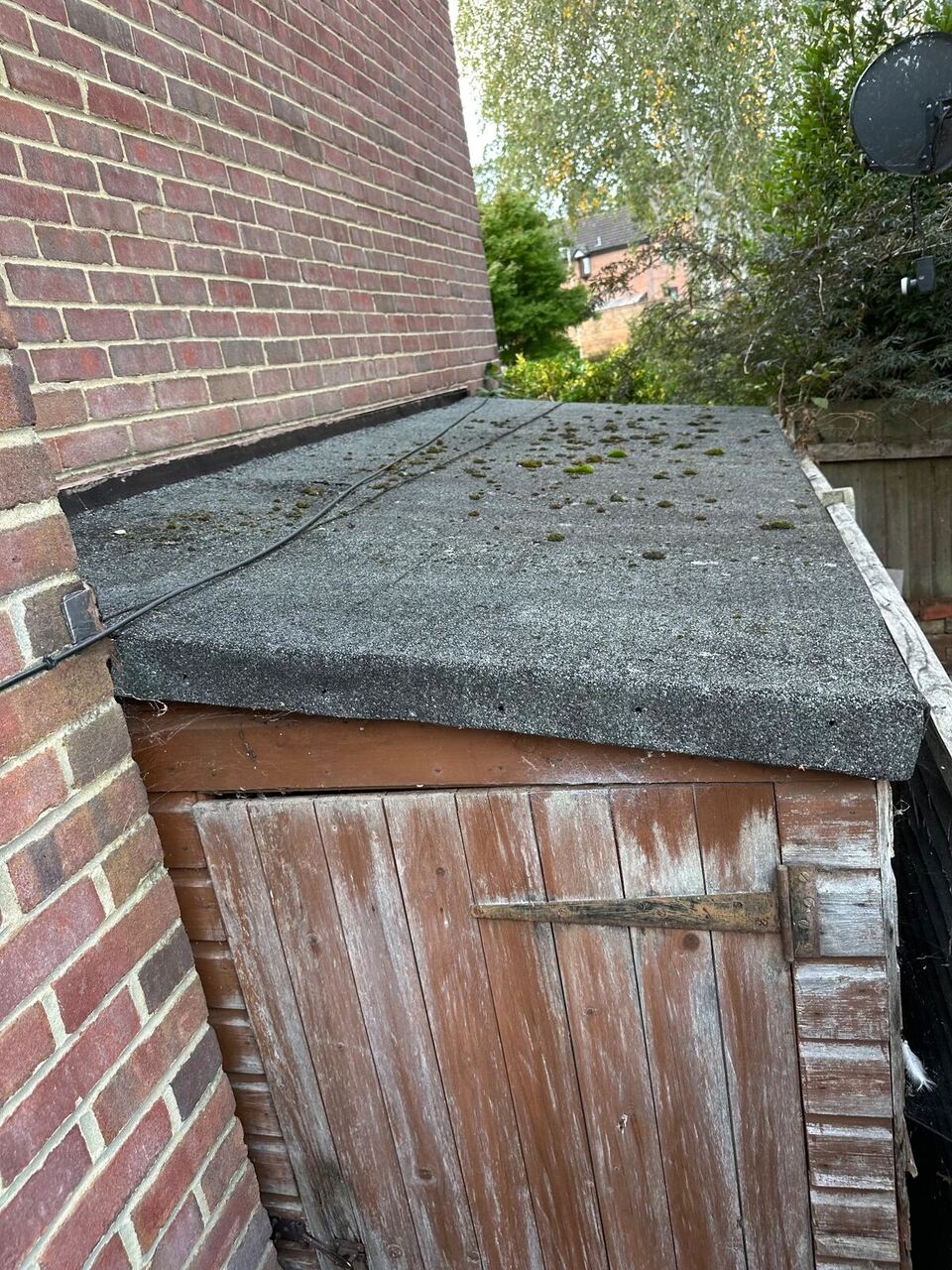
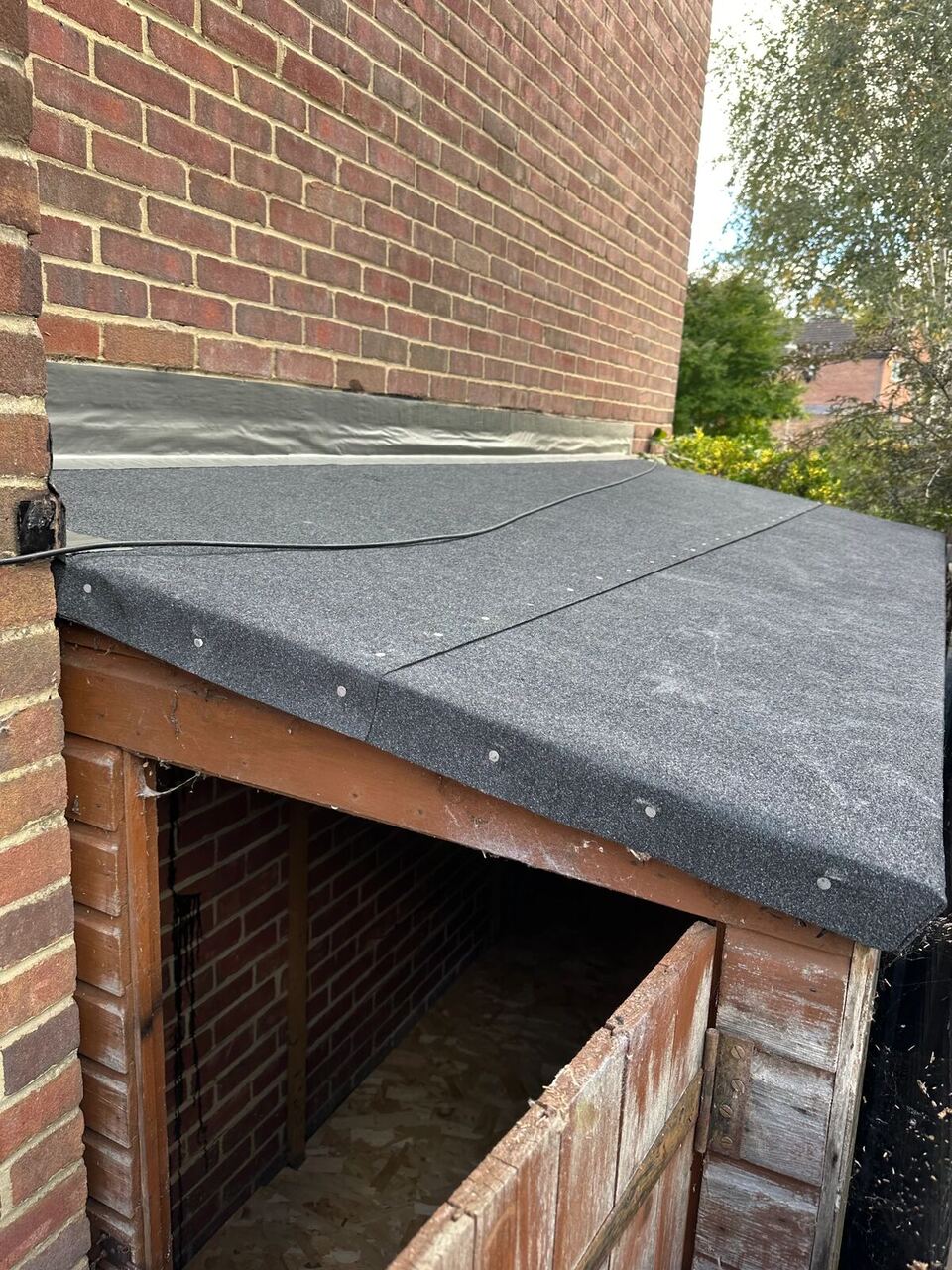
Why Do Shed and Lean-To Roofs Start Leaking?
Over time, roofing felt can become brittle, split or lift around the edges. Fixings may work loose, and seals that were once watertight can gradually begin to fail.
One area particularly worth checking is where a lean-to roof meets the wall of a house.
If the weatherproofing around this joint deteriorates, rainwater can find its way underneath the roofing material and into the structure below.
These leaks can go unnoticed for quite some time, especially if the shed is mainly used for storage.
A Recent Lean-To Roof Repair in Yateley
This particular lean-to measured approximately 3.8 metres long by 1.5 metres deep and was attached to the side of a house.
The original roof had been constructed using chipboard covered with roofing felt. Where the felt met the brick wall, it had been turned upwards and sealed.
Although this had clearly worked for many years, the seal had eventually deteriorated, allowing water to penetrate.
Unfortunately, the chipboard had gradually absorbed moisture, causing it to swell and break apart.
Water had also reached the chipboard floor, which had suffered similar damage.
Thankfully, the main supporting roof timbers were still in reasonable condition, meaning the entire structure didn’t need rebuilding.
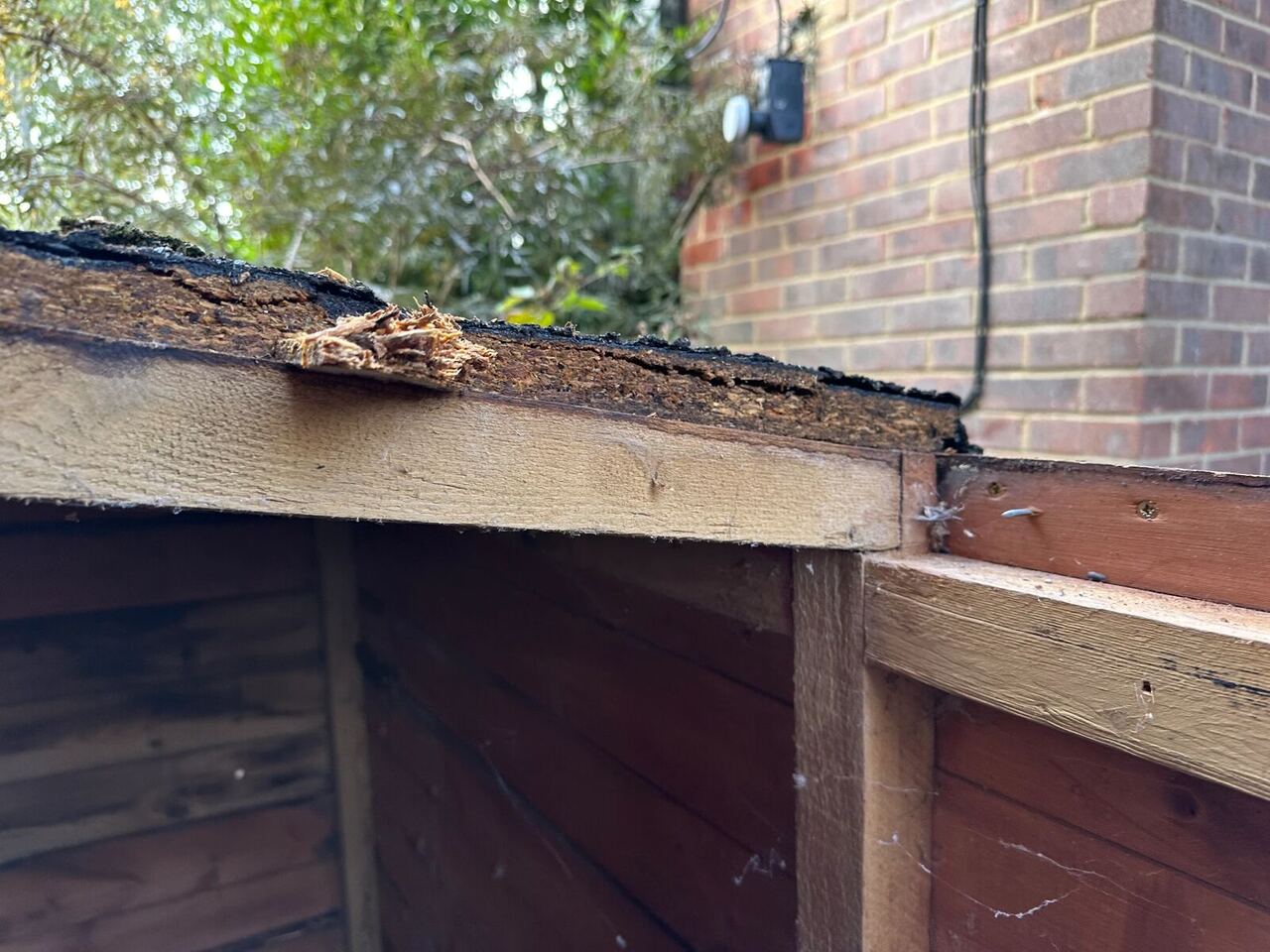
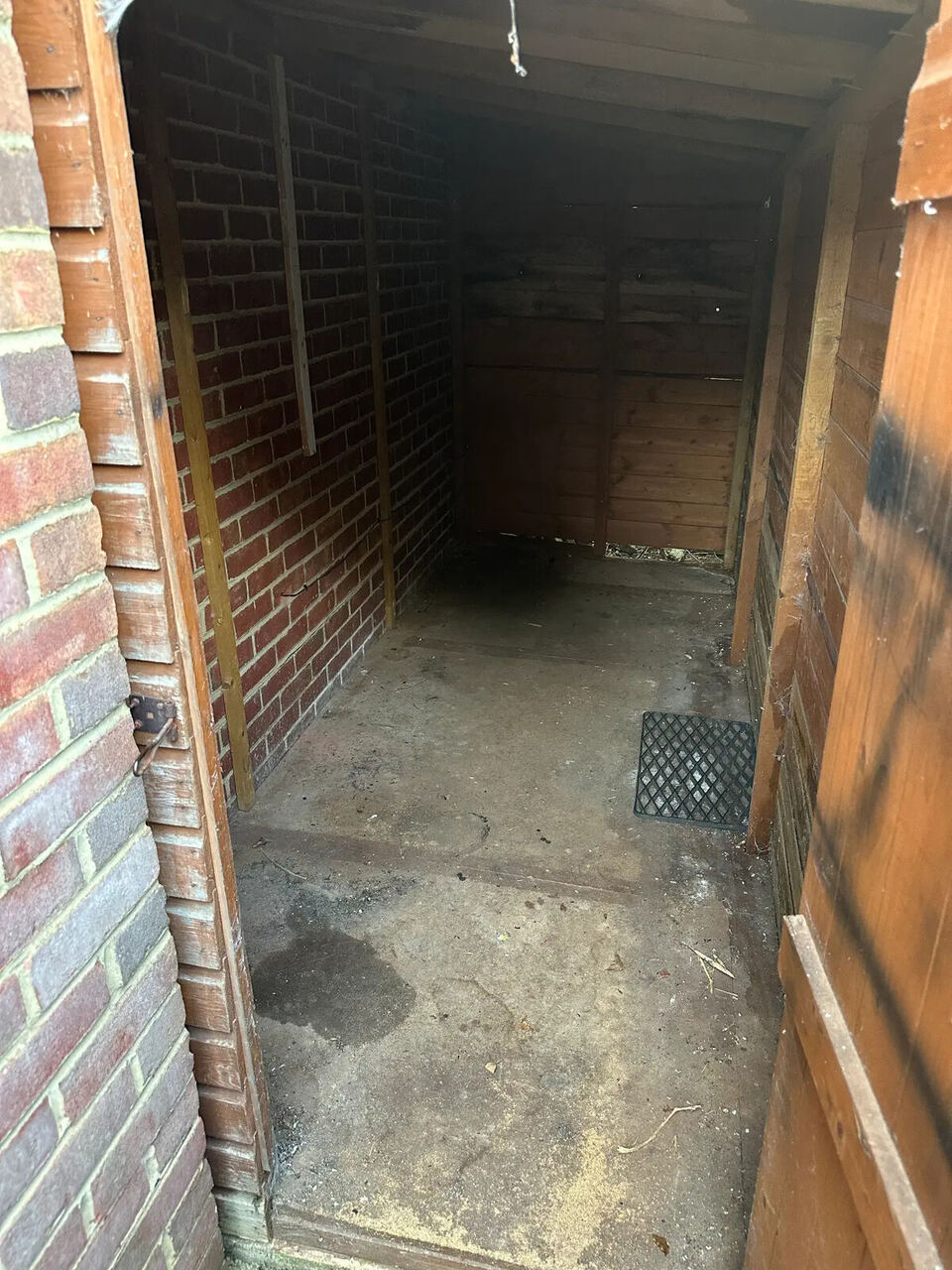
Removing the Damaged Roof and Floor
I started by removing the old roofing felt and stripping away the damaged chipboard.
Some sections had deteriorated so badly that they practically fell apart during removal.
Once the old roof was off, I removed the remaining nails and fixings, checked the supporting timber and secured a few areas with additional screws.
I also cleaned away the old sealant residue from the brickwork using a scraper and wire brush, preparing the surface for the new weatherproofing.
The old floor was removed too, but I managed to keep some of the original boarding intact.
This was particularly useful because I could use it as a template when cutting the new floorboards, saving time and helping everything fit neatly.
Rebuilding With OSB3 Boards
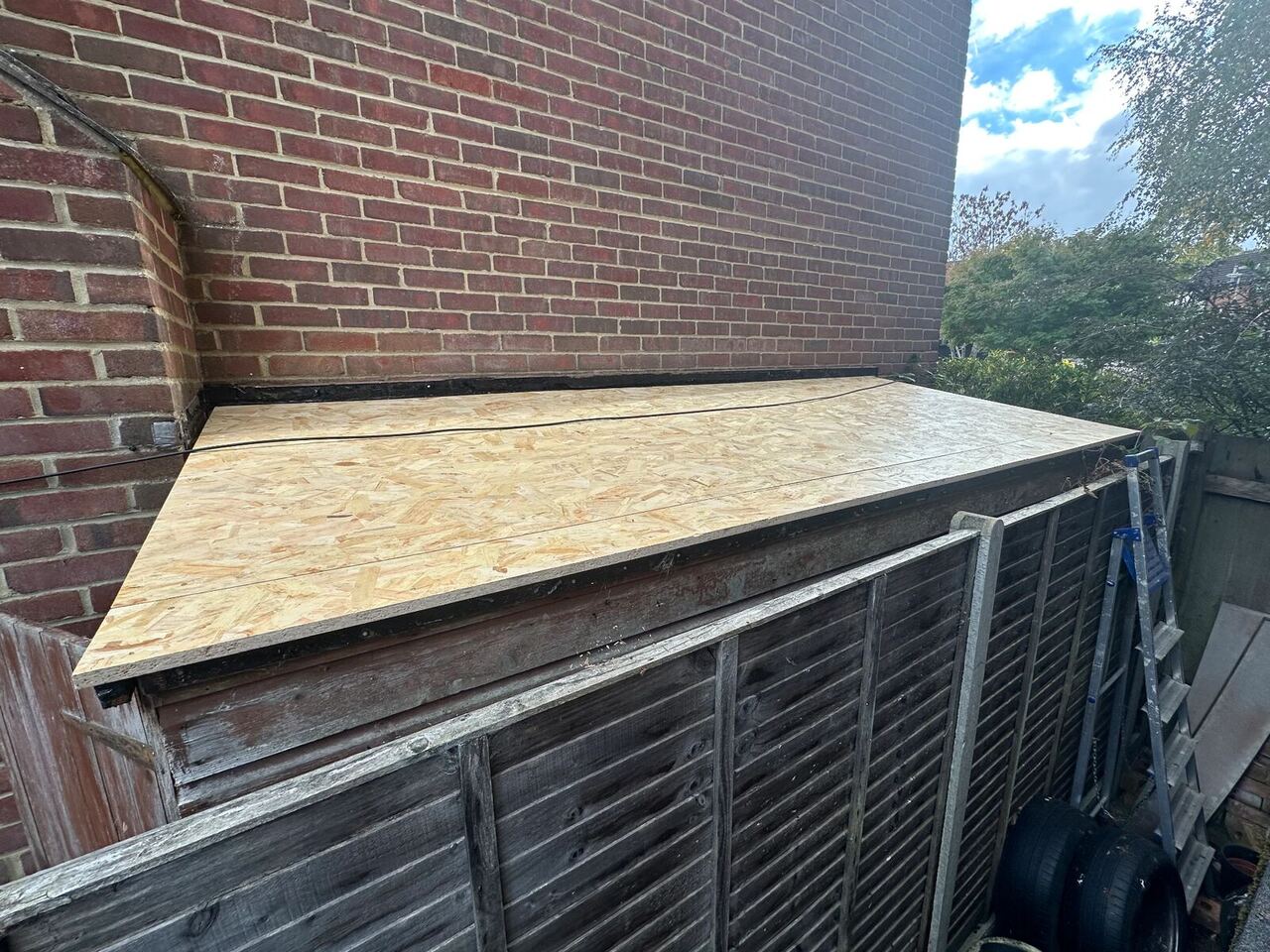
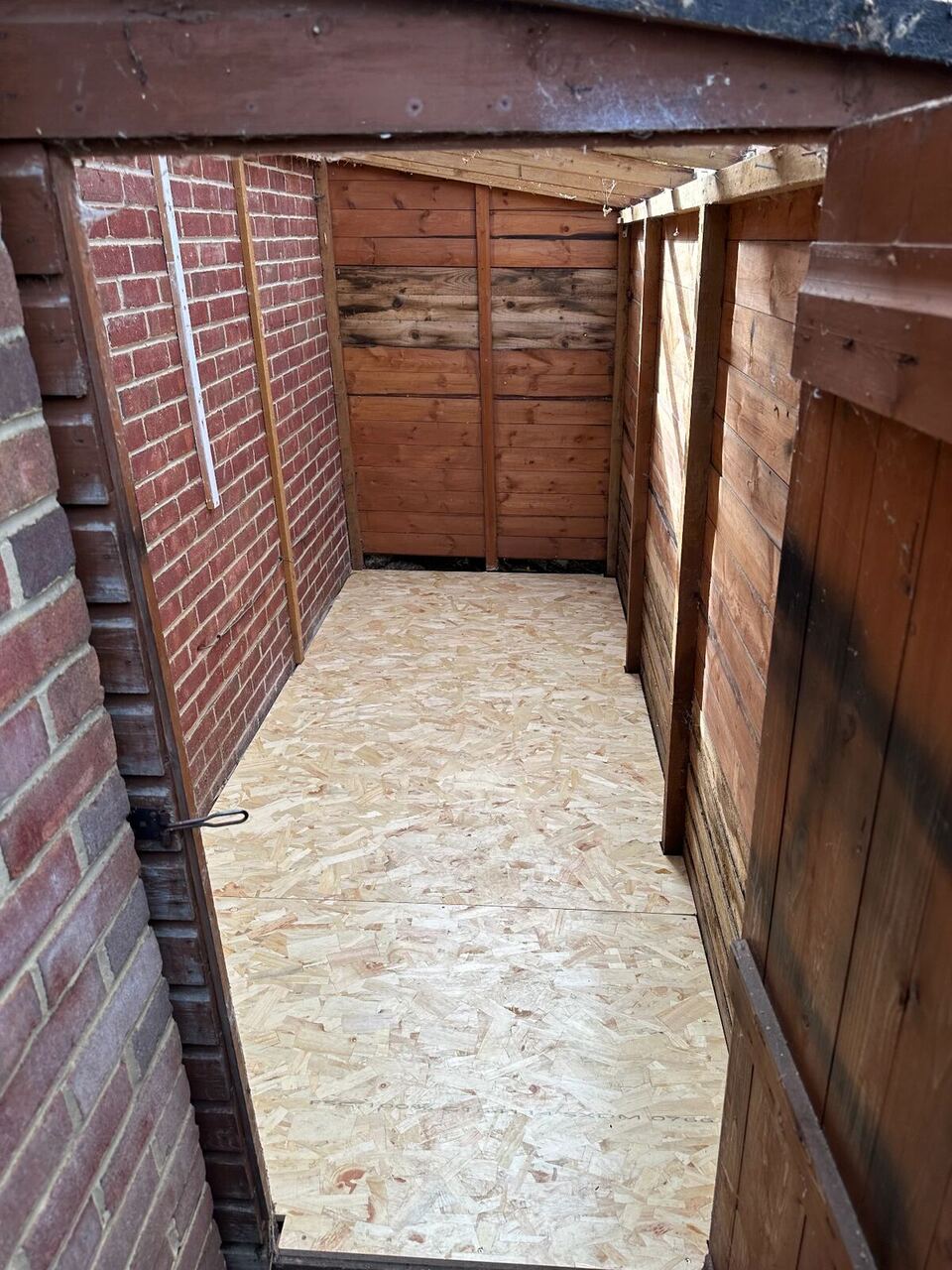
For the replacement roof and floor, I used 18mm OSB3 boards.
OSB3 is a moisture-resistant structural board designed for humid conditions, making it a more suitable replacement than ordinary chipboard when properly installed and protected from the weather.
I cut the roof boards to fit across the supporting rafters, making sure the joints were properly supported, and secured everything with screws.
The original floor supports were a little basic, so I also fitted additional timber supports underneath to help distribute the weight more evenly and strengthen the floor.
Once the new boards were fitted, the whole structure felt much more solid.
New Roofing Felt and Weatherproofing
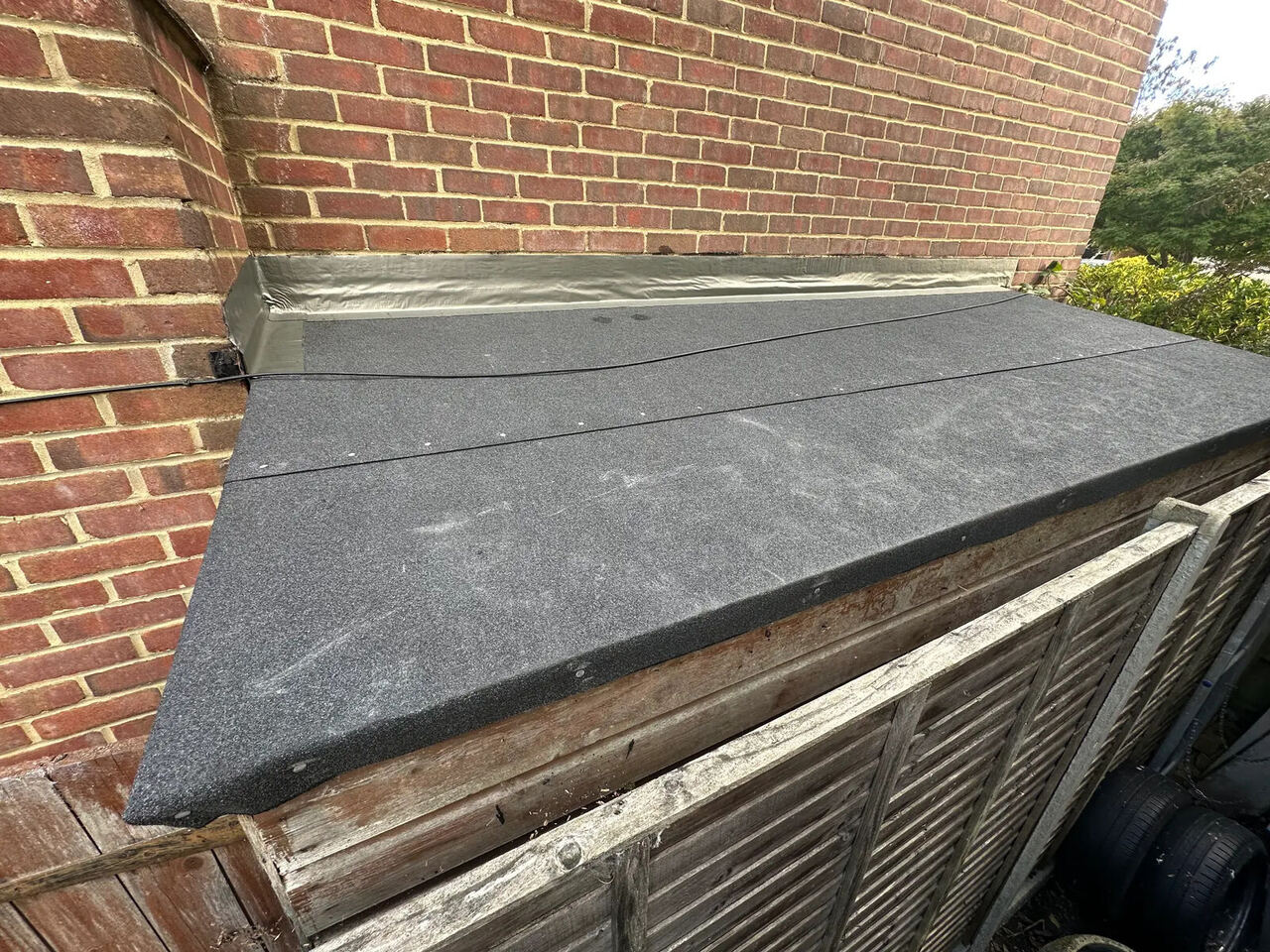
With the replacement roof boarding in place, I installed new black roofing felt, fixed using roofing felt adhesive and clout nails.
Particular attention was given to the joint where the roof met the brick wall, as this was where the original leak had started.
After cleaning and preparing the surfaces, I turned the felt up against the wall, applied the appropriate primer and installed Flashband weatherproofing tape across the joint.
Getting the detailing right around roof edges and wall junctions is important, as even a small opening can allow water to get underneath.
The right roofing material and installation method will depend on the roof’s pitch and construction.
A Few Extra Repairs Along the Way
While working on the lean-to, I also noticed some rotten timber cladding around the back.
Rather than leave it, I took the opportunity to replace the damaged sections and tidy everything up.
The old felt and boarding were also broken down and prepared for disposal.
The whole job took approximately six hours, including removing the damaged materials, replacing the roof and floor, strengthening the supports and completing the additional repairs.
The finished lean-to looked much fresher, the floor was solid again and the original leak had been resolved.
Can You Repair a Shed Roof Without Replacing the Boards?
In many cases, yes.
If you’ve noticed a small leak and caught it early, the boards underneath might still be perfectly sound.
Depending on the condition of the roof, it may be possible to:
- Repair a small damaged section of roofing felt.
- Replace the old felt while retaining the existing roof boards.
- Repair a failing weatherproofed joint.
- Replace individual damaged boards rather than the entire roof.
However, if the boarding has become swollen, soft or rotten, simply covering it with more felt won’t solve the underlying problem.
The damaged sections will usually need replacing before the roof can be properly weatherproofed again.
My Advice: Don’t Ignore a Small Leak
If you’ve noticed water getting into your shed, summerhouse or lean-to, I’d recommend getting it looked at sooner rather than later.
A small repair today could prevent a much bigger job further down the line.
It’s also worth checking underneath the roof covering if you notice damp patches, swollen boards or a musty smell.
And just because an outbuilding is getting old doesn’t necessarily mean it needs replacing.
As this particular job showed, sometimes the main framework is still perfectly serviceable. With new boards, fresh roofing felt and a few sensible repairs, an older structure can be given a new lease of life.
If your lean-to has a corrugated plastic roof instead, you might find my polycarbonate lean-to roof replacement project useful.
Need Help With a Leaking Shed or Lean-To Roof?
If your shed roof needs refelting, the boards have started to rot or you’re unsure whether it’s worth repairing, feel free to get in touch.
I carry out shed repairs, roof refelting, timber repairs and general property maintenance across Yateley, Sandhurst, Fleet, Camberley, Crowthorne, Farnborough and surrounding areas.
I’m always happy to take a look and offer some practical advice. Get in touch
More Advice & Projects
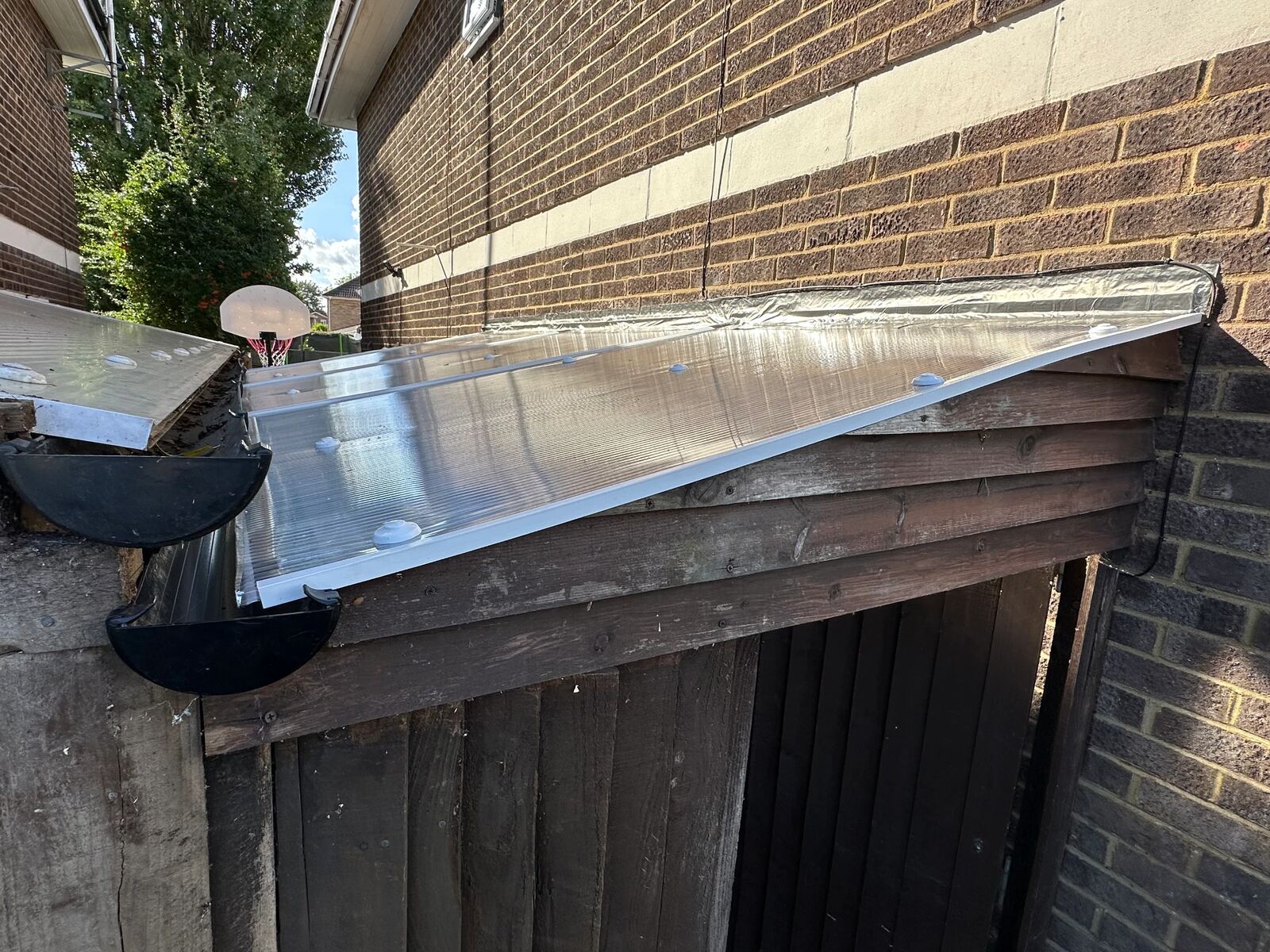
Replacing an Old Corrugated Lean-To Roof With Polycarbonate
An ageing corrugated lean-to roof in Yateley had started letting rain pour in. Here’s how it was replaced with multiwall polycarbonate, and what to consider if you’re doing the same.
Read the article
Can You Mount a TV on a Plasterboard Wall?
Short answer: yes, in most cases — but only with the right fixings and a bit of care. Here's how I approach plasterboard TV mounting on jobs around Yateley, Fleet and Camberley.
Read the article